
Solar energy is one of the most promising renewable energy sources, and Serbia’s sunny climate makes it an ideal candidate for solar panel adoption. But how do you know if your home, business, or even a larger public building is suitable for solar panels? The answer lies in using tools that assess the potential of solar energy. Whether you’re a curious student, a homeowner, or an energy expert, these tools can guide you step-by-step toward making informed decisions about solar system installations.
Additionally, according to the new Law on Planning and Construction, an energy passport is mandatory for all real estate in Serbia, not only for new properties but also for existing ones, which is an extra incentive to improve energy efficiency.
Energy Passports: What Are They and Why Are They Important?
An energy passport is a certificate that, based on the energy properties of your property, assigns it an energy class from “A” to “G.” The highest rating is “A+,” while “G” is the lowest. This document is mandatory for all buildings and allows owners to clearly see how energy-efficient their property is and where potential savings can be made.
Architects and Engineers: Designing Smarter Buildings for the Future
While tools like the Solar Calculator are excellent for individuals and small businesses, architects and engineers have a unique opportunity to apply these principles on a larger scale by designing smarter buildings that incorporate renewable energy from the outset. Instead of focusing solely on retrofitting measures like insulation or window upgrades, professionals can plan buildings as self-sustaining ecosystems.
Buildings are major energy consumers worldwide; in Europe, they account for 40% of total energy use, and in Serbia, this percentage is even higher at 60%. The reason for such high energy consumption in buildings lies in the fact that most residential structures in Serbia were built between the 1960s and 1980s, a period when little attention was paid to energy efficiency and energy consumption.
In Serbia, 300,000 to 400,000 homes lack thermal insulation altogether. Just heating these homes requires over 220 kWh/m² of energy annually, and besides heating, additional energy is needed for cooling during summer, lighting, and operating household appliances, further increasing overall energy use. For comparison, the average energy consumption for heating in European countries is around 70 kWh/m² annually, while in Serbia, the average is about 150 kWh/m²—more than double.
On the other hand, the Regional Center for Energy Efficiency in Zrenjanin demonstrates how smart architecture can combine energy efficiency with renewable sources in public buildings. This facility was built not only to prevent energy losses but also to showcase how technology can promote sustainable urban development. Similarly, the B2 building in Belgrade integrates ABB smart home systems, including electric vehicle chargers and weather-responsive automation. These projects show how architects can create multi-story or public buildings that actively contribute to Serbia’s renewable energy goals.
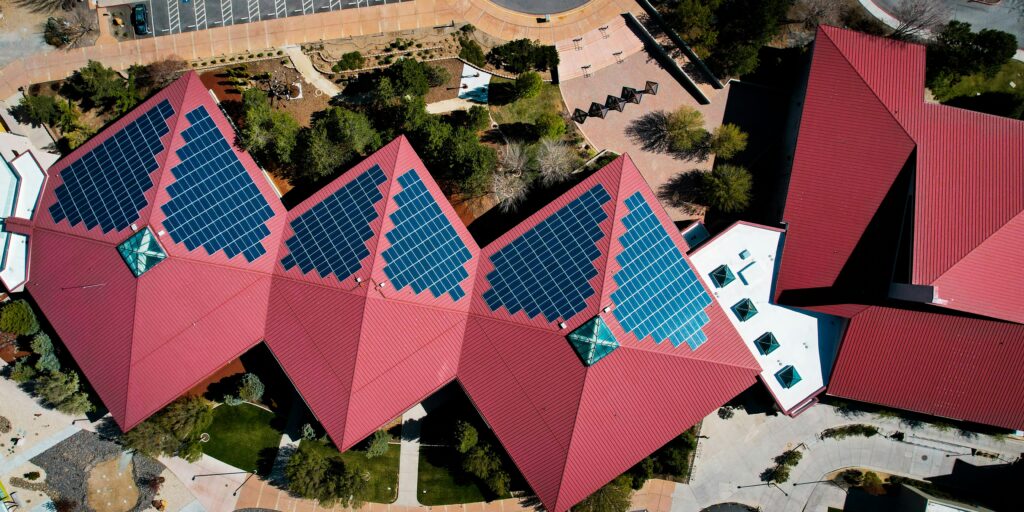
The Magdon residential complex in Niš, consisting of three buildings with 130 apartments, has decided, by a two-thirds majority, to pursue energy transition. Residents own solar panels with a capacity of 74 kW. Thanks to electricity production from rooftops, utility bills are lower for everyone, ranging from 150,000 to 180,000 dinars per month. Schools like the Textile Design School and “Branko Radičević” Elementary School in New Belgrade have also adopted solar panels on their roofs. Both facilities are in trial operation and are expected to save around 70% of the electricity they previously drew from Serbia’s power system. The photovoltaic system at “Branko Radičević” has an installed capacity of 130 kW, while the Textile Design School’s system is 90 kW.
Photo: Center for Sustainable Energy Development
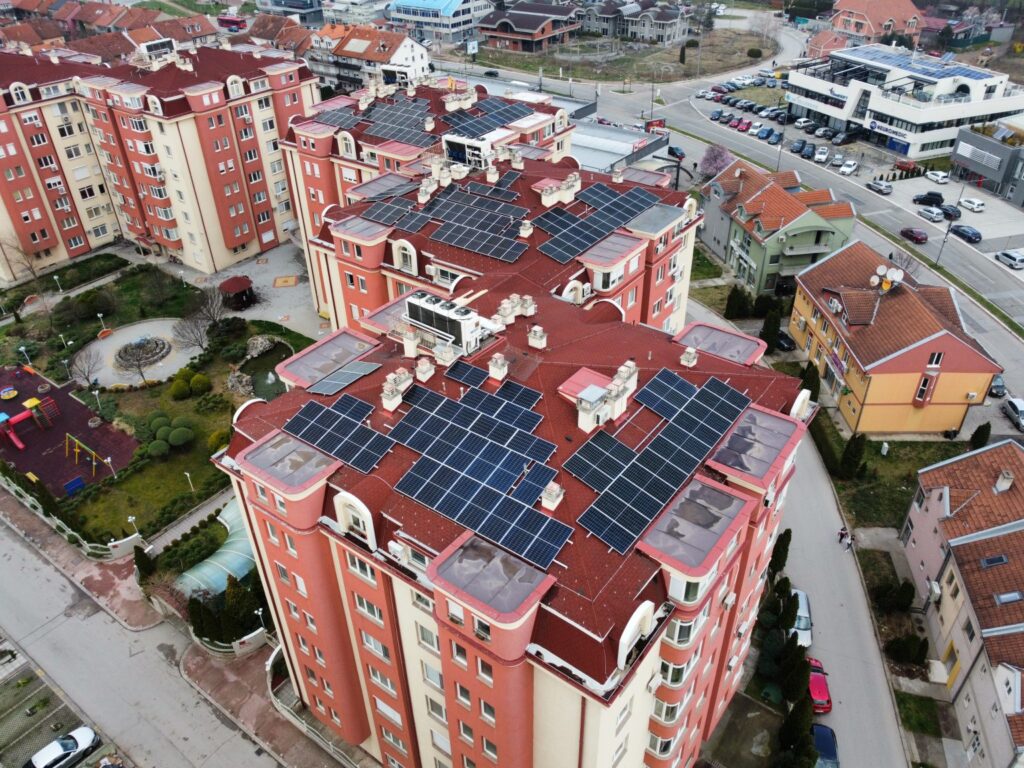
ProCredit Bank, as a leading bank in promoting and supporting investments in renewable energy sources, has built a modern solar power plant with a capacity of 40 kW on the roof of its headquarters in Belgrade. By doing so, it has secured not only additional energy independence but also significantly reduced its environmental pollution impact.
Furthermore, OTP Bank Serbia has installed solar panels on the roof of its central building, part of its broader “green transition” strategy. These panels not only supply the building with renewable energy but also reflect the bank’s commitment to ecological sustainability and reducing its carbon footprint. The bank aims to lead by example, encouraging clients and businesses to adopt environmentally responsible practices through green banking products and initiatives like the “Generator Zero” competition, which supports innovative projects aimed at reducing carbon emissions.
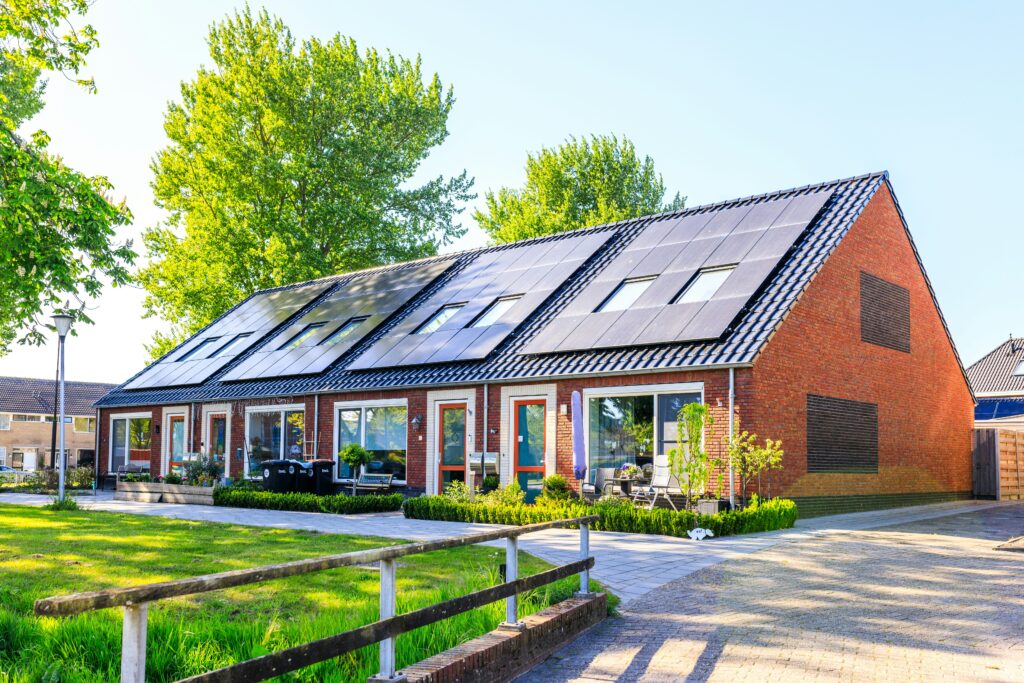
By integrating photovoltaic systems directly into building designs, such as rooftop solar panels or solar facades, architects can help clients achieve net-zero energy consumption while reducing long-term operational costs. Public buildings like schools or municipal offices could become community hubs for clean energy production, inspiring others to follow suit.
Why Estimate Solar Potential?
Before investing in solar panels on existing buildings, it’s essential to understand how much energy your system can produce and whether it’s cost-effective. Estimating your solar potential helps you to:
- Determine the size and capacity of the system you need.
- Calculate potential savings on electricity bills.
- Assess environmental benefits, such as reducing greenhouse gas emissions.
- Plan financing options and return on investment.
GIZ’s Recommendations for Improving Energy Efficiency in Public Buildings
GIZ recommends a comprehensive approach to improving energy efficiency and the use of renewable energy sources in public and private buildings in Serbia, through a combination of legal frameworks, practical tools, training, and targeted investments.
In cooperation with selected regional development agencies and municipalities, GIZ has supported the establishment of Energy Advisory Centers and trained staff in these centers to provide citizens with relevant information and advice on improving the energy efficiency of residential buildings, as well as on the application of solar energy in households. Currently, such centers are available to citizens in Užice, Knjaževac, and Bačka Palanka.
Additionally, in cooperation with the Faculty of Engineering at the University of Kragujevac, GIZ is working on the development of the Open School of Energy Efficiency, which will be available online to the broader interested public.
Explore the Solar Calculator
Serbia’s Solar Calculator is a simple online tool designed for households, homeowner associations, businesses, and architects to assess their solar potential with just a few clicks. Here’s how it works:
Input Basic Data: Provide information about your location, roof orientation, and electricity consumption.
Get Instant Results: The calculator estimates the system capacity you need, installation costs, and potential savings over time.
Access Additional Resources: Learn about legal frameworks for connecting to the grid, and explore financing options tailored for Serbia.
This tool also highlights broader benefits of adopting solar energy, such as reducing dependence on fluctuating electricity prices and contributing to Serbia’s renewable energy targets. Students and young professionals can use these tools as an entry point to understanding renewable energy technologies and their impact on sustainability efforts in Serbia. It’s a powerful way to influence peers, friends, and family members with decision-making power.
Steps for Effectively Using Solar Tools
Here’s a practical guide to using tools like the Solar Calculator:
1. Assess Your Roof: Check if your roof receives enough sunlight throughout the day. South-facing roofs with minimal shading are ideal for maximum efficiency.
2. Use Online Tools: Tools like the Solar Calculator provide tailored estimates based on your specific conditions in Serbia.
3. Compare Options: Use the tool to explore different system sizes and financing models to find what best fits your budget and energy needs.
Serbia provides numerous examples of how innovative design can help shape a greener future. From smart public buildings in Zrenjanin to high-tech residential complexes in Belgrade, these projects prove that integrating renewable energy into architecture is not only feasible but also practical. Architects have the power to lead this change by designing buildings that are not just functional but also environmentally responsible.
The article was prepared by Mikser Association for the needs of the German development cooperation project implemented by Deutsche Gesellschaft für Internationale Zusammenarbeit (GIZ) GmbH on behalf of the Federal Ministry for Economic Cooperation and Development of the Federal Republic of Germany (BMZ).
The ideas, positions, and opinions expressed in this article do not necessarily represent the ideas, positions, and opinions of the German Organization for International Cooperation – Deutsche Gesellschaft für Internationale Zusammenarbeit (GIZ) GmbH and do not bind the organization.