

World premiere: Concert by Lukas Genuišas and Kosta Jakić and Open studio with artists
The famous Lithuanian-Russian pianist Genuišas, the laureate of the Chopin competition and the young Belgian pianist of Serbian origin, Kosta Jakić, together in the premiere Belgrade concert on October 31, 2024 in the Great Hall of the Kolarac Endowment.
It is about a concert that combines classical music and a new genre – SPEAKING PIANIST, in cooperation with PhD In One Night, an international platform for aesthetic education and experimentation for everyone.
The concert in Belgrade is the first in a series of planned concerts on the world tour of these two musicians, who brought together the impossible: a pianist who comes from a dynasty of Russian music pedagogues (Lukas Geniushas’ grandmother is Vera Gornostayeva, while his parents are pianists) and Kosta, who has a completely different musical background .
An open studio with the artists, the day after the concert, would allow all interested visitors to hear from Lukas and Kosta parts of their research on the connection between classical music and their discovery of the composer Rzewski and the pianist’s performative “talking”, and also about the necessity of experimentation in music that does not correlatively lead to giving up on classical music, but on the contrary to illuminating classical music in a new light and pointing to its presence in various new contexts. The special guest at the open studio will be Dr. Katarina Marković.
Get your tickets from the ticket office at Kolarac, or online!
The repertoire:
Kosta Jakic
Liszt: Sonetto 104 del Petrarch, p. 161
Rzewski: De Profundis
Lukas Geniušas
Chopin: Miniatures
Rzewski: Rubinstein in Berlin
Kosta and Lukas
Rzewski: Winnsboro cotton mill blues, for two pianos
About the artists:
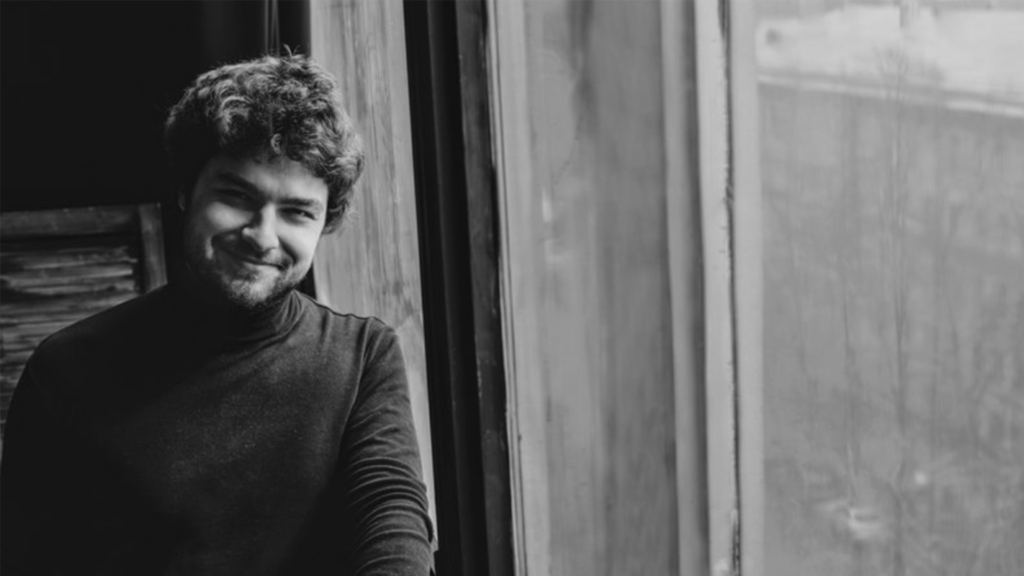
Russian-Lithuanian pianist Lukas Geniušas has firmly established himself as one of the most exciting and prominent artists of his generation.
Praised for his ‘brilliant and mature’ (The Guardian), he has been invited to give recitals in the most prestigious venues around the world such as Wigmore Hall, Concertgebouw Amsterdam, Salle Gaveau, Louvre Auditorium, Frick Collection New York, Phillips Collection, Teatro Carlo Felice, Verdi Hall in Milan and the Great Hall of the Moscow Conservatory. He is also regularly invited to festivals including the Gilmore Keyboard Festival, La Roques d’Antheron, Piano auk Jacobins, Rheingau, Ruhr Piano Festival, Schloss-Elmau and Lockenhaus Music Festivals.
Lukas Geniušas performs with numerous orchestras, including Philharmonie Radio de France, Orchester National de Lyon, NHK Symphony Orchestra, City of Birmingham Symphony Orchestra, Stavanger Symphony, Saint Petersburg Philharmonic, Kremerata Baltica, Russian National Orchestra, Mariinsky Theater Symphony Orchestra, Mariinsky Theater Symphony Orchestra, Toronto and the St. Gallen Symphony Orchestra conducted by Valery Gergiev, Mikhail Pletnev, Leonard Slatkin, Charles Dutot, Andrey Boreyk, Tugan Sohiev, Sauli Sondecis, Antonio Vito, and Rafael Pajara to name a few.
photo: Ivan Put

Kosta Jakić is a Belgian pianist and conductor of Serbian origin, who graduated magna cum laude from the Royal Conservatory in Antwerp, Department of Classical Piano. He builds his relationship to music and the world in a specific way, connecting it with research and passion for creating a close relationship with his audience. Bridging the boundaries of tradition and discovery, his concerts are treasured journeys, combining beloved classical repertoire with hidden gems of modernism. Rooted in the Russian piano tradition, Kosta began his studies with Sergej Leshenko at the age of 12, later continuing at the Royal Conservatory in Antwerp under Polina Leshenko from the age of 17 when he began his studies through the “young talent” program in parallel with high school.
Questioning the place of classical and experimental music in today’s world, he bases his research on the analysis of the place of music in conditions of detention, determinism and restrictions. He performed in the largest Lithuanian prison with the organization “Looking at the Stars” and at the sites of World War II concentration camps in Belgium. His research into the role of music in the world of the Second World War concentration camps, its essential and often hidden role, led him to meet Simon Gronovski, a surviving member of the Jewish community who, as a 10-year-old boy, escaped Auschwitz by jumping from the train that took the rest of them irretrievably. Simon Gronovski, a doctor of legal sciences and a great fighter for peace and tolerance in a world still divided by wars, is also a self-taught jazz pianist. Since then, Kosta has collaborated with him through exchanges on this topic, through concerts for peace and dialogues. Ivan Put, until recently the photo editor of the largest Flemish daily newspaper De Standard, is in the process of completing a film on the subject of the intergenerational meeting between Simon and Kosta.
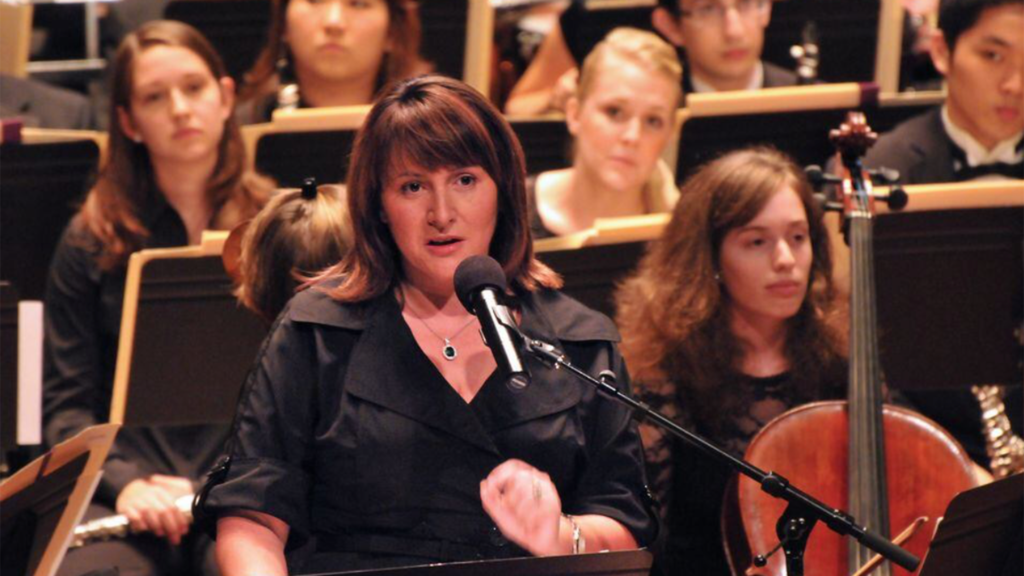
Dr. Katarina Marković has been a full professor of musicology at the New England Conservatory in Boston, Massachusetts, USA since 2004. A native of Belgrade, Serbia, Dr. Marković studied and lived both in Europe and the USA. She completed her doctoral studies in musicology at the Brandeis University, USA, and worked in academia for 25 years publishing articles and participating in scientific conferences. She is the recipient of research grants and awards from the French Ministry of Culture, Max Cadet, Sachar Foundation, DAAD and Brandeis University. In her research, she specialized in the music of late and post-romanticism, with a particular passion for Gustav Mahler. At the New England Conservatory in recent years, she has held the position of Chair of the Department of Music History and Musicology, as well as serving on various university committees. As a musicologist and pianist, she dedicated her professional life to educating young musicians in understanding the broader aspect of their art. Emphasizing the social and cultural conditions that affect the type of art we study today, both in terms of possibilities and limitations, Dr. Marković strives to awaken in young musicians a broader sense of social responsibility in their artistic creation. Many of her students have gone on to form and lead music projects, festivals, and educational and programs in the US with a focus on cultural, racial, and economic diversity. Dr. Marković is also passionate about opening the walls of elite artistic and academic institutions to a wider audience and has collaborated with the Museum of Fine Arts in Boston, on joint lectures and programs. He lives and works in Vienna recently.